



Table of Contents
Royal Decree 88/2026 is one of those regulations that represent a paradigm shift in the area they govern. In this case, the text has been in effect since February of this year. It can be explained using a “before and after” comparison (which you can analyze in greater detail in an impact study found at the end of this article).
Previously, compliance in the electricity sector was a matter of processes: submitting a contract, generating an invoice, switching electricity suppliers… Now, the focus is entirely different: the regulator will not ask the company whether it reported the information; instead, it will ask whether the company can prove it with certainty. In other words, the challenge is not simply to comply, but to be able to demonstrate compliance when necessary— both to regulatory agencies and even in court.
The regulation strengthens consumer rights, trust, and transparency in the electricity sector. Some of the most significant changes it includes are:
- The company’s obligation to provide precontractual information to new customers in a durable medium. In addition, the document must be written in language that is easy to understand.
- The record of when the document was read and the time at which it occurred.
- Retention of the user’s identification, the signed contract, and, if applicable, the recording of the call.
- Providing advance and separate notice of rate increases.
- Recognition of consumer rights, such as: traceability when switching suppliers and aggregators, and access to a free online complaint service.
Starting in February, operational compliance will no longer be sufficient, and the inability to demonstrate regulatory compliance could result in a very significant penalty.
Royal Decree 88/2026 has become a major challenge in terms of the traceability of communications with customers, who, incidentally, have the right to request their file containing all the evidence. And it requires companies to demonstrate not only that the information was communicated, but also what information was provided, when it was made available to individuals, and under what conditions.
The Value of Trust Services Under eIDAS
In other words, the core issue of this new regulation is one of evidence, and the risk for companies arises when a user files a complaint or initiates legal proceedings. In such cases, the only defense is a complete, well-organized file containing all the necessary evidence.
The good news is that the requirements regarding traceability are precisely addressed by the mechanisms set forth in Regulation (EU) No. 910/2014 (eIDAS). Data sent and received through a qualified electronic delivery service is presumed to be intact. And elements such as advanced electronic seals, various types of electronic signatures, and time stamps make any record defensible, even in the event of a dispute.
Partnering with a qualified, trusted service provider—such as MailComms Group— ensures compliance and legal certainty, while also streamlining and accelerating processes through digitization. Equally important, it optimizes the customer experience in their interactions with companies.
A qualified service provider has the ability to turn the necessary evidence into a competitive advantage during critical moments such as:
- Pre-contractual Communication and Registration.
- Contract and Consent.
- Price review and contract changes.
- Changes in electricity supplier and aggregator.
- Claims Management and Customer Service.
- Notice of Disconnection Due to Nonpayment and Suspension of Service.
Impact Study
Our specialist consultants have analyzed Royal Decree 88/2026, its new provisions, risks, and opportunities. We’ve compiled their findings in this impact report, which you can read completely free of charge. In it, you’ll find background information, compliance requirements, the benefits of using eIDAS mechanisms, a series of use cases for turning risks into opportunities, and a practical, visual summary of pain points and solutions.
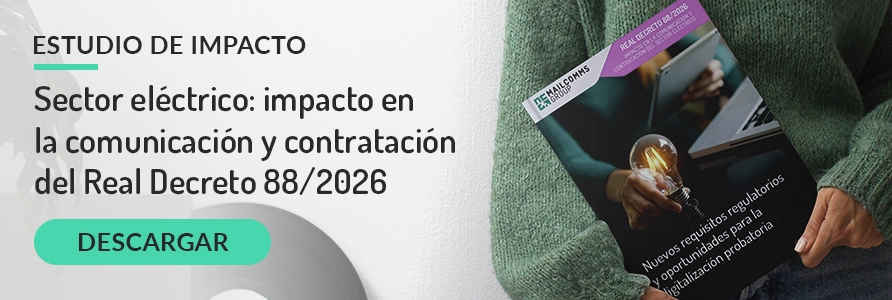
The document also includes a section that is crucial for understanding how the new decree coexists with other cross-cutting regulations such as the General Data Protection Regulation, the General Law for the Protection of Consumers and Users, the Customer Service Law, Law 11/2023 on Digital Accessibility, and the eIDAS Regulation itself. In many cases, all of these will apply at one point or another during customer-facing processes. Viewing them as an ecosystem of trusted services (robust digital identification, qualified electronic signatures, omnichannel certified delivery, evidence storage, and customer relationship tools) also represents a small paradigm shift: from regulatory friction to competitive advantage.
And doing so quickly matters. Lacking reliable traceability is a latent risk. On the other hand, the investment in trusted services pays off by avoiding penalties, mass returns, or reputational disputes. But it also pays off by building trust and confidence among users, which leads to customer loyalty and the purchase of new services or the expansion of existing ones.