



AML6 (Sixth Anti-Money Laundering Directive) is the sixth European directive against money laundering, formally Directive (EU) 2024/1640, which, together with Regulation (EU) 2024/1624, forms the new European AML/CFT (Anti-Money Laundering/Counter-Terrorism Financing) regulatory package. It establishes a harmonized framework of due diligence obligations, transaction monitoring, and sanctions for the financial sector and other regulated sectors in the EU.
Although the full transposition period extends through 2027 and no Royal Decree or law has yet been published to amend Law 10/2010 in order to incorporate all the obligations arising from AML6 into the Spanish legal system, certain obligations took effect on July 10, 2025.
The Sixth Anti-Money Laundering Directive (AML6), proposed by the European Union as part of the new Digital Finance Package, marks a firm step towards a stricter and more effective harmonization of the legal framework in the fight against money laundering and terrorist financing. Below, we review its main new features, the sectors affected and how technology can become a key ally for compliance.
Main changes introduced by AML6
AML6 strengthens and broadens the scope of its predecessor (AML5), with substantial changes aimed at greater uniformity among the Member States:
- Uniform criminalization: AML6 requires all EU countries to criminalize 22 offenses related to money laundering, including arms trafficking, serious tax offenses, corruption and cybercrimes.
- Criminal liability of legal persons: Companies may be held criminally liable if they fail to prevent or detect laundering activities within their organization.
- Increased minimum penalties: The directive establishes minimum penalties of up to 4 years imprisonment for serious money laundering offenses.
- Increased cross-border cooperation: Mechanisms for the exchange of information between Financial Intelligence Units (FIUs) of member countries are strengthened.
Transactions Subject to Enhanced KYC Controls Under AML6
The new provisions have a cross-cutting impact on numerous areas of operation, among them:
- Opening of bank accounts or financial products.
- Transfer of funds or digital assets.
- Incorporation of companies or purchase of real estate.
- Activities with a high volume of cash or cryptographic assets.
These operations will be subject to increased scrutiny, with enhanced due diligence (KYC) and documentation obligations.
Sectors required to apply AML6
AML6 expands the number of entities subject to legal obligations. To the traditional sectors (finance, insurance, real estate, lawyers and notaries) are added:
- Cryptoasset platforms and digital wallet providers.
- Crowdfunding companies.
- Dealers in art and high-value objects.
- Sports professionals and sports agents, in certain cases.
AML6 Penalties: Fines of up to €10 million and criminal liability
The sanctioning framework is considerably toughened:
- Significant fines for legal entities (up to 10% of annual turnover or €10 million).
- Activity prohibitions, disqualifications and closure of establishments.
- Individual criminal liability for managers who fail to take reasonable preventive measures.
Compliance is no longer optional: negligence is no longer an excuse.
Video Identification and Certified Communications: Technology for KYC/AML Compliance6
In this context of increasing regulation, technology becomes essential to ensure agile and effective compliance. Two key tools are:
- Video-identification
Remote identity verification by video allows you to comply with KYC requirements in a secure, efficient and compliant way. It reduces fraud and speeds up customer onboarding, ensuring the traceability of the process.
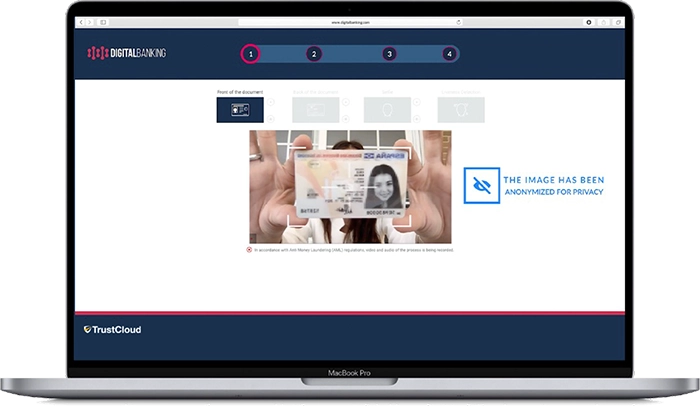
MailComms Group’s certified video identification solution allows this process to be conducted remotely and in compliance with AML6 KYC requirements, generating auditable evidence of each customer’s verification process.
- Certified communications
The use of certified communication channels (certified email, secure SMS, etc.) allows documenting every interaction with the client or partner, generating valid legal evidence for audits or inspections. It also facilitates the management of consent and the archiving of AML documentation.

MailComms Group, as a Qualified Trust Service Provider (QTSP) under eIDAS, provides these certified communication services with full legal validity, facilitating the automatic archiving of evidence in the client’s file.
AML6 Compliance: Turning an Obligation into a Competitive Advantage
AML6 reinforces the EU’s commitment to financial integrity, imposing greater demands for transparency, control and accountability. Companies must be prepared not only to comply, but to turn compliance into a competitive advantage. Incorporating technological solutions such as video identification and certified communications not only simplifies processes, but also increases the legal and operational security of the organization.
Frequently Asked Questions
What is AML6, and how is it different from AML5?
AML6 (Sixth Anti-Money Laundering Directive, Directive (EU) 2024/1640) is the sixth European directive against money laundering. Compared to AML5, it introduces significant changes: it criminalizes 22 specific money laundering offenses in all EU countries (criminal harmonization), introduces criminal liability for legal entities, raises the minimum penalties to 4 years in prison for serious offenses, and strengthens cross-border cooperation among Financial Intelligence Units. It also expands the number of sectors required to comply with AML obligations.
Since when has AML6 been in effect in Spain?
Several obligations under the European AML regulatory package (Regulation (EU) 2024/1624 + AML6 Directive) took effect on July 10, 2025. The full deadline for transposing the AML6 Directive into Spanish law extends until 2027, when Law 10/2010 on the prevention of money laundering is expected to be amended to incorporate all obligations arising from the new regulations.
Which sectors are required to comply with AML6?
AML6 retains the sectors already subject to compliance under AML5 (financial institutions, insurance companies, real estate firms, attorneys, and notaries) and adds new entities subject to compliance: crypto-asset platforms and digital wallet providers, crowdfunding companies, dealers in art and high-value items, and sports professionals in certain cases. All of these entities must implement enhanced due diligence (KYC) and documentation requirements.
What role does video identification play in AML6 compliance?
Video identification allows for remote, secure customer identity verification (KYC) in compliance with European regulatory requirements. In the context of AML6, it streamlines the account opening process, digital onboarding, and transactions requiring a higher level of due diligence, generating traceable and auditable evidence for each verification process. When performed by a qualified provider, this evidence is fully legally valid for regulatory audits.
What are the penalties for noncompliance with AML6?
AML6 establishes a stricter penalty regime: fines for legal entities of up to 10% of annual turnover or 10 million euros (whichever is greater), bans on conducting business and disqualifications, closure of establishments, and individual criminal liability for executives who fail to take reasonable preventive measures. The directive also imposes minimum prison sentences of 4 years for individuals convicted of serious money laundering offenses.