


The consulting firm Experis has just published the third edition of its CIO Trends Report: “Technologies that drive, people that transform”. This analysis collects the qualified opinions of some twenty technology leaders on the present and immediate future of technology use. on the part of companies. The CIOs of companies and organizations such as Acerinox, Amadeus, the Official College of Telecommunications Technical Engineers, Diners Club International, Línea Directa and Securitas, among others, participated in the study. And in the report also offers its conclusions our Chief Technology OfficerAlberto Angón. You can request the DOWNLOAD THE COMPLETE DOCUMENT HERE.
From technology to trust
“Trust architectures and digital identity: the new basis of the European digital ecosystem for industry” is the title of our CTO’s contribution. In his column, Alberto starts from the idea that “digital transformation is no longer a technology issue but a trust issue”. CIOs today are concerned with innovating from security, interoperability and regulatory compliance, as a result, the industry has moved from understanding cybersecurity as a concept associated with internal systems and networks to ensuring the identity, integrity and traceability of each digital interaction.
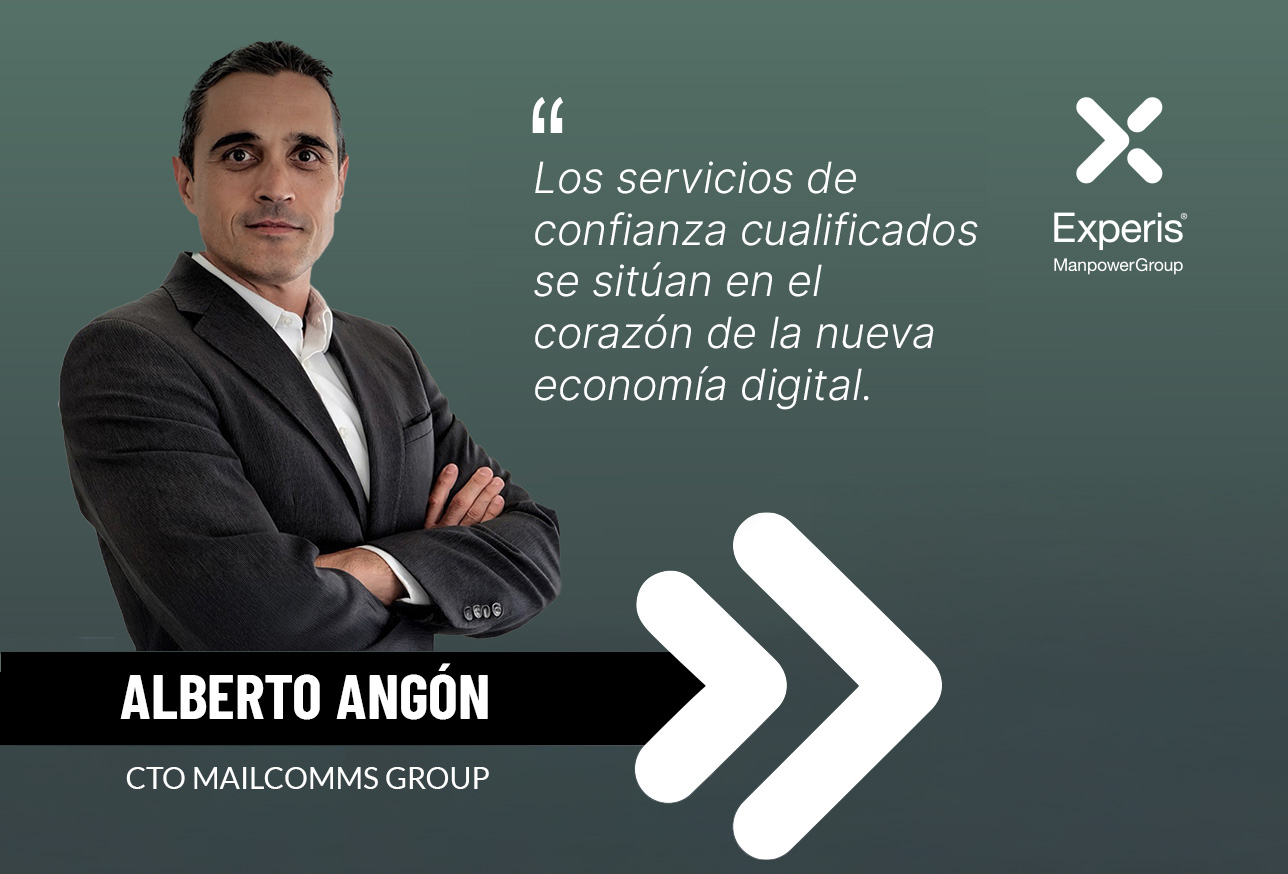
All this in a context in which “people work from anywhere, share data with third parties and deploy services in the cloud”. Technology has to build trust architectures based on three elements: identity, authentication and preservation. “And in this new scheme qualified trust services are at the heart of the new digital economy.“.
The prominent role of the Qualified Trusted Service Providers
Below, Alberto expresses the role played by Qualified Trusted Service Providers (QTSP), as we are accredited at MailComms Group. A QTSP issues certificates or electronic signatures and guarantees the reliability of digital interactions between people, companies and systems. And it does it all within the eIDAS regulation and through audited processes aligned with standards such as NIS2, DORA, ISO and NIST.. That is to say, the same European standards that are required of critical organizations..
“In the new digital economy, trust becomes a strategic asset“. And this trust is built, Alberto assures, through a technical and legal framework that enables to innovate safely and integrate new technologies, such as generative AI, in an agile way, in compliance with in compliance with European regulations.
Main conclusions of the report
After gathering the opinions of experts, Experis has dumped in its report some conclusions about the main trends we will see in 2026. Artificial Intelligence is among them, as productivity accelerator and as a factor for change in organizations. Another important trend is the management of power skillsThe analysis also emphasizes the importance of the skills of professionals that can be acquired and improved through practice. The analysis also gives relevance to the ethical and inclusive use of technologyto combat the resistance to change (related to AI), advancing the reduction of emissions emissions reduction and designing robust responses to current and future cybercrime threats..