



Table of Contents
- Importance of communication in transactional processes
- What is omnichannel communication?
- Benefits of omnichannel communication in transactional processes
- Practical examples of transactional processes with omnichannel communication
- Keys to implementing an effective omnichannel strategy
- Common mistakes when implementing omnichannel communication
- Frequently asked questions about omnichannel communication to improve customer experience.
The 21st century consumer is not satisfied with simply acquiring quality products at the best price. They put the shopping experience itself and the interrelationships with the company at the forefront.
Omnichannel communication makes it possible to meet these needs, focusing all the attention on the customer. The company gains visibility and loyalty, while optimizing its transactional processes.
These are the perspectives from which we analyze this communicative phenomenon:
- How communication influences a transactional process.
- The concept of omnichannel communication.
- How this omnichannel approach benefits transactional operations.
- Some interesting examples of the application of the omnichannel system.
- Tips for implementing this type of communication in a company.
- Summary of the most common failures that occur in this implementation process.
Do you want to learn more about how to carry out marketing strategies that improve your customers’ experience? Discover our Direct and Promotional Marketing service to optimize your actions.
Importance of communication in transactional processes
Information has become one of the determining factors in making a purchase decision. Consumers have a proactive attitude, seeking this information through different channels. What’s more, the same person can jump from one channel to another, even on the same day.
This is why customers value so much having an omnichannel system that integrates all their information, so that management is more agile and efficient.
But they also find it more satisfying for the company to have their data unified and accessible to their different departments. There is nothing more annoying than having to identify yourself at every interaction or re-fill in data for every purchase.
In the marketing field, these are the benefits of benefits of integrating physical and digital channels in campaigns.
What is omnichannel communication?
This is an integrated approach to communications in which all channels (physical and digital) are used in a consistent and synchronized manner. This interaction with the customer always has a personalized approach, with the objective of providing a satisfactory customer experience. In addition, it is important to establish a smooth and constant flow, without interruptions or gaps.
In omnichannel communication, the company plays with all the connection points it has with its customer:
- The physical store and the online store.
- Your website.
- Mobile applications.
- Your social networks.
- Digital means of communication: messaging, email, SMS.
- Virtual assistants.
Here you have an interesting comparison comparison between online and offline marketing, with all the details that may interest you.
Benefits of omnichannel communication in transactional processes
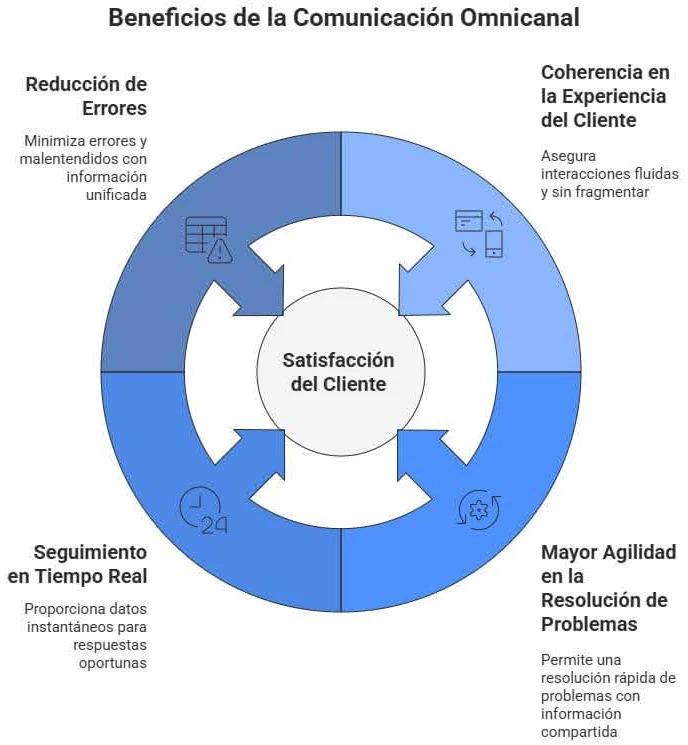
The main objective of omnichannel communication is to respond to customers’ demands for personalized attention, coverage of needs and constant interaction. All this, so that they feel satisfied. And what are the benefits of this change in perspective?
Consistency in customer experience
One of the aspects most valued by users is that the interrelationship is not fragmented, there are no watertight spaces, all communications are fluid. This translates into savings of effort and time.
Increased agility in problem solving
This strategy implies an optimization of resources. Since all the departments and agents involved have the same information simultaneously, no time is wasted in having to resubmit a problem or complaint.
Real-time tracking
Often, being late in responding to a customer’s need is the same as not arriving at all. The advantage of omnichannel communications is that you have the data in real time, allowing you to act quickly to these demands.
Reduction of errors and misunderstandings
Again, ensuring that all participants have the same information at the same time is a guarantee that there will be no mistakes, loss of information or misinterpretations. An essential issue that has a direct impact on customer satisfaction.
Practical examples of transactional processes with omnichannel communication
Often, the most effective way to understand a phenomenon is to visualize real cases. Here are some examples of omnichannel transactional communication applications.
- Click and collect process. The customer sees a product on social networks, clicks on the store’s website, generates a shopping cart and makes an online payment. Finally, he picks up the order in the physical store.
- Loyalty programs. The user receives an email informing of the launch of a points campaign, associated with certain purchases (refueling, use of the card in other establishments). The points earned are uploaded to all applications, with immediate updates. They end up being used in different ways: part of a physical purchase, a discount on a car rental…
- Personalization of experience, following data analysis. The company collects all of a customer’s purchase data, both online and offline. It includes not only the items they are interested in, but also their usual schedules or their propensity to participate in surveys and forms. All in all, you end up proposing a value-added experience. For example, a make-up session for an event by a cosmetics company.
Keys to implementing an effective omnichannel strategy
As with any new approach, the difference is in how well it is implemented. These are the essential elements that must come together in any omnichannel communication system implementation.
Knowing your customer and their preferred channels
It is impossible to understand this strategy without focusing on personalized attention. It is necessary to know each customer as precisely as possible. Treat them individually in every way, from their product preferences to the tone of the messages. And, of course, the channel through which they reach you, which may vary with the same person at different times.
These are the keys to understanding what personalized marketing is.
Investing in appropriate technology
It is essential that your company implements a technological system with all the necessary tools to ensure effective omnichannel communication. It is important that, in the same platform you find at least:
- CCM Technology (Customer Communications Management).
- Quality database systems.
- Data analysis service.
- Tools for the design and creation of communications, to unify criteria and adapt to each channel.
- Of course, you must have a suitable CRM, such as Salesforce.
Training teams in omnichannel customer service
Along with technology, the other pillar of an omnichannel service is the people responsible for handling these customer communications. It is essential to train these teams of professionals.
On the one hand, in the versatility of knowing and mastering the specificities of each channel. It is also interesting that they master techniques for streamlining dialogues, language and have the ability to transmit calmness and coherence.
Continuously monitor and optimize the customer experience
Omnichannel communication is a dynamic process. Its success lies in responding to customer needs at all times, being sensitive to their changes. An update and accompaniment that requires analyzing the results of each action, taking note of the successes and mistakes, in order to apply the appropriate modifications.
Common mistakes when implementing omnichannel communication
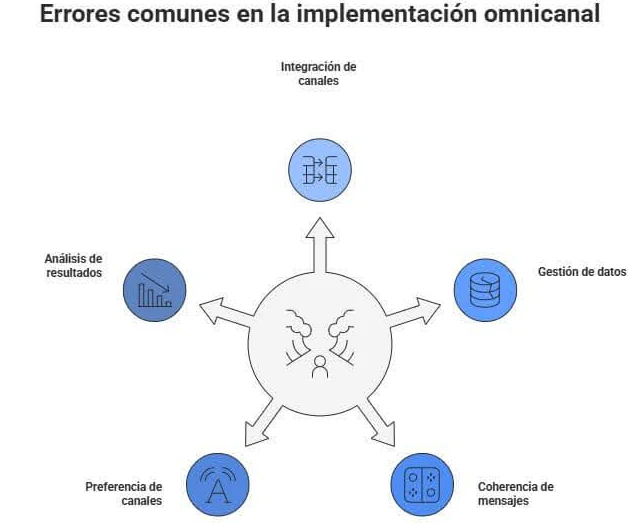
Experience has shown that not just any implementation of an omnichannel system will do. We have already detailed the keys to do so with guarantees of success. Along the same lines, it is interesting for your company to know what the most common failures are, in order to avoid them:
- Failure to properly integrate all channels. For the customer, it causes inattention, a feeling of disorganization, just the opposite of what they are looking for. For the company it is a huge waste of time, among other things.
- Incorrect data management. We have already mentioned that customer information is essential to be able to personalize communications. You need to manage quality data and the ability to analyze it.
- Lack of consistency in messages. At all times, the user must recognize that he/she is interacting with the same brand, which implies congruence in the image, tone and content of the messages.
- Generalization or preference for a channel. It is not the company, but the customer who chooses the communication channel. It should not be taken for granted that there is one channel that is more valued by all, personalization always prevails.
- Failure to follow up and analyze results. Omnichannel communication is always a dynamic process and, as such, must be updated, taking into account the actual experiences gathered.
Frequently asked questions about omnichannel communication to improve customer experience.
What is the difference between omnichannel and multichannel communication?
Multichannel communication is not structured as an integrated strategy, but to maximize the potential of each channel. It is true that different channels are leveraged to reach more customers, but with independent interactions.
On the contrary, omnichannel communication puts the customer at the center, offering the possibility for them to move from one channel to another within a coherent and uninterrupted, fluid and constant experience.
Which channels can be part of an omnichannel strategy?
The ideal is to incorporate as many as possible and, above all, to combine the physical (postal) with the digital. Within the digital ones, email, SMS, RCS web, apps, messaging such as WhatsApp, audios and videos, among others , stand out for their effectiveness.
How does omnichannel communication improve customer experience?
Communications are more dynamic and customers feel that they are constantly receiving personalized attention. They receive the information they want, at the time they decide and through the channel that best suits them at any given moment. They are the protagonists of the relationship and, all of this, increases their level of satisfaction.
How do I know if my omnichannel strategy is working?
Engage an omnichannel communications platform that includes a Data Quality system, which manages and analyzes data in real time, including reporting.