
More and more everyday activities are being carried out without having to travel: opening a bank account, applying for public aid, contracting a service or signing a document. This convenience brings with it a crucial challenge: how do you make sure that the person on the other end is really who they say they are?
In Spain, identity fraud has increased significantly in recent years. The expansion of artificial intelligence has accelerated this trend, facilitating the creation of false documents, manipulated images or even artificially generated videos and audios capable of imitating a real person. This forces companies and administrations to reinforce their verification mechanisms to avoid increasingly sophisticated impersonations.
For this reason, reliable, secure and up-to-date remote identification systems are more important than ever.
Physical and legal identity: two realities that also need to be verified
When we talk about identity, we usually think of individuals, but in Spain it is also essential to correctly identify legal entities: companies, associations, organizations or any entity with its own legal personality. Both identities require different methods to be accredited.
Identity of natural persons
It is the identity of specific individuals: citizens or residents.
It is credited by:
- DNI / DNIe
- NIE
- Passport
- Personal digital certificates (FNMT or other providers)
- Access systems such as Cl@ve
- Video identification for remote processes
- Wallet of the National Police, which allows to carry an official digital version of the DNI in the cell phone.
These technologies make it possible to verify that the person is who he/she says he/she is and that the identification document is authentic.
Identity of legal entities
A legal entity has no face or physical document, but has a legal identity based on official records.
To prove it, technologies and elements are used such as:
- Representative digital certificates (issued by FNMT or other trusted service providers).
- Legal representative.
- Volunteer representative.
- Certificate of entity (legal entity).
- Information from the Commercial Registry, which certifies the existence of the company and who is authorized to sign.
- Digitized powers of attorney, when it is necessary to demonstrate that a natural person has authority to act on behalf of the company.
- Company electronic seals, equivalent to a digital signature but issued in the name of the entity, not a person.
- Identify the final beneficiaries.
These technologies make it possible to guarantee that a company is real, that it exists legally and that the person acting on its behalf is authorized to do so.

Digital Identity in Spain: Certificates and official systems
In Spain there are official solutions that allow secure proof of identity in public and private transactions.
Digital certificate of the electronic DNI (DNIe)
The DNI incorporates a chip containing a digital certificate. With a compatible reader, it allows you to identify yourself and sign documents online with full legal validity. It is a secure method, although less used due to the need for a physical reader.
Cl@ve System
Cl@ve is the public administration’s digital identity system. It offers several ways to identify oneself:
- Cl@ve PIN: temporary code sent to the cell phone.
- Permanent Cl@ve: user + strengthened password.
- Cl@ve with certificate: combination with digital certificates.
It is one of the most accessible methods for citizens.
Digital certificate issued by the FNMT or other trusted service providers.
The personal digital certificate allows to identify oneself, sign documents and access to public and private services. The representative certificates allow a company to act legally through the Internet, for example to sign contracts or carry out procedures with the Administration.
It is important to point out that this identification mechanism is suitable for Public Administrations, but not for registrations regulated by SEPBLAC.
New National Police Wallet
The National Police has recently launched an official application that allows you to carry your ID in digital format on your cell phone, while maintaining the security guarantees of the physical document. Among its advantages are:
- Immediate identification without the need to carry a physical ID card.
- More agile access to public and private services.
- Future integration with European digital identity systems.
This wallet is a step towards a more modern, mobile and accessible identity model.

Video identification: document verification, biometrics, and selfie
When a person is unable to travel, many Spanish entities use video identification, combining several elements:
Documentary verification
The DNI, NIE or passport is checked, verifying visible and invisible elements to detect modifications or falsifications.
Facial biometrics
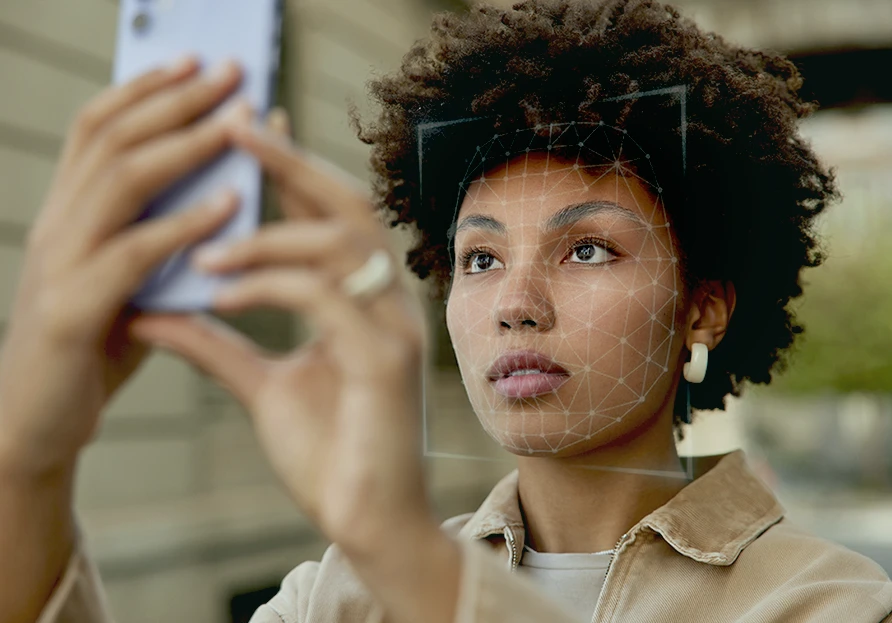
The system compares the person’s face with the photograph on the document, confirming that it matches.
Selfie or proof of life
The user performs simple gestures to demonstrate that it is a real person and not a manipulated video or image. These techniques make it possible to detect impersonation attempts, including those generated by AI. This type of tests can be active (performing random gestures) or passive (performed by algorithms based on the video recording).
The need for simple and accessible identification systems
Security is essential, but it cannot go against usability. One of the great challenges today is to make these systems understandable and accessible to everyone, regardless of their digital experience. Identity mechanisms must offer:
- Guided and easy to follow processes.
- Assisted and unassisted alternatives.
- Immediate support in case of doubt.
- A uniform experience for individuals and legal entities.
In this regard, our assisted and unassisted video identification solution is designed to ensure that no one is left behind. Thanks to the Assistance button, any user can request help at the exact moment they need it, without abandoning the process. This improves the experience, reduces errors and ensures that the identification process is truly inclusive.